
Published on
What does an ecommerce SEO agency do?
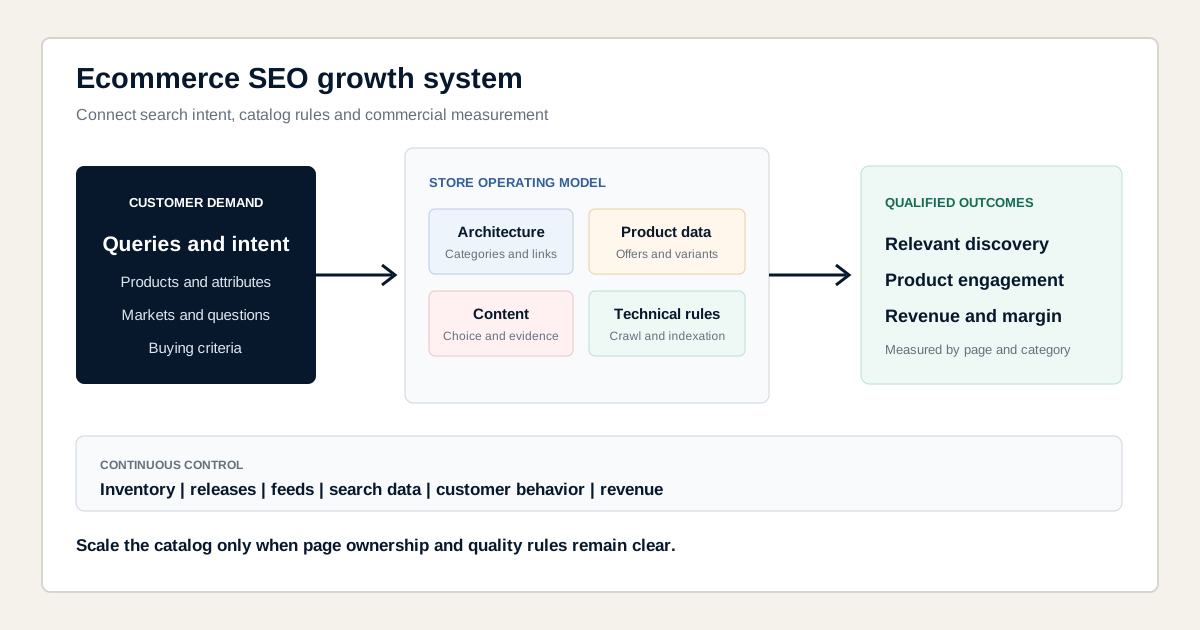
An ecommerce SEO agency turns the commercial structure of an online store into a search system that customers and search engines can navigate. It connects query demand with categories, subcategories, products, guides and selective filter pages, then removes technical and content barriers that stop those URLs from performing.
The work is broader than adding keywords to product descriptions. Jakency combines SEO services, catalog architecture, technical implementation, product data, content, authority and analytics. Decisions are made against business outcomes such as qualified sessions, transactions, revenue and margin, not ranking counts alone.
When does an online store need specialist ecommerce SEO?
An online store needs specialist ecommerce SEO when catalog scale, platform behavior or merchandising changes create problems that a page-by-page checklist cannot solve. A shared template issue can affect thousands of URLs, while one architecture decision can determine which pages receive internal links and indexation signals.
- Category pages receive impressions but few clicks or transactions.
- Products are visible for model names but not for non-branded buying queries.
- Filters and sorting parameters create large numbers of duplicate or low-value URLs.
- Important categories sit too deep in navigation or have no contextual links.
- Out-of-stock and discontinued products are handled inconsistently.
- Structured data, product feeds and visible prices disagree.
- International store versions compete or send customers to the wrong market.
- SEO reporting shows traffic without revenue, margin or product availability context.
A new store can also benefit before launch. Planning taxonomies, templates, product identifiers, analytics and redirects early is usually easier than repairing a large index after migration.
How is ecommerce SEO different from standard SEO?
Ecommerce SEO applies the same search fundamentals to a dynamic commercial catalog with inventory, variants, prices, filters, feeds and recurring product changes. Standard SEO may optimize a stable service site with dozens of pages. A store can generate thousands of URLs from a smaller number of templates and database rules.
| Area | Standard service website | Ecommerce website |
|---|---|---|
| Primary page types | Services, locations, cases and guides | Categories, products, variants, brands, filters and guides |
| Page changes | Mostly editorial releases | Inventory, pricing, feeds and merchandising update continuously |
| Technical risk | Usually limited URL growth | Parameters and combinations can expand crawl space quickly |
| Conversion | Lead, call or appointment | Product view, cart, checkout, transaction and repeat purchase |
| Commercial context | Lead quality and pipeline value | Revenue, margin, stock, returns and customer value |
What should ecommerce SEO services include?
Ecommerce SEO services should include the workstreams needed to improve discovery, indexation, relevance, product understanding, authority and commercial measurement. The exact scope depends on the platform and catalog rather than a fixed package.
| Service area | Work performed | Deliverable |
|---|---|---|
| Audit and baseline | Review search data, templates, crawling, indexation, products and revenue | Issue model, baseline and prioritized roadmap |
| Demand mapping | Cluster commercial queries, product attributes, brands and questions | Keyword, entity and page ownership map |
| Catalog architecture | Design categories, subcategories, navigation and selective landing pages | Taxonomy and internal linking specification |
| Technical SEO | Control rendering, canonicals, parameters, sitemaps and templates | Development requirements and QA log |
| Category optimization | Improve titles, headings, copy, products, facets, proof and links | Category briefs and reusable template rules |
| Product optimization | Improve identifiers, attributes, media, copy, availability and alternatives | Product template and data requirements |
| Structured data and feeds | Align visible product information, markup and merchant data | Implementation specification and validation record |
| Authority | Plan useful assets, partnerships, mentions and product-led digital PR | Authority and outreach roadmap |
| Measurement | Connect landing pages with transactions, revenue, margin and releases | Dashboard and review rhythm |
Which page should own each ecommerce search intent?
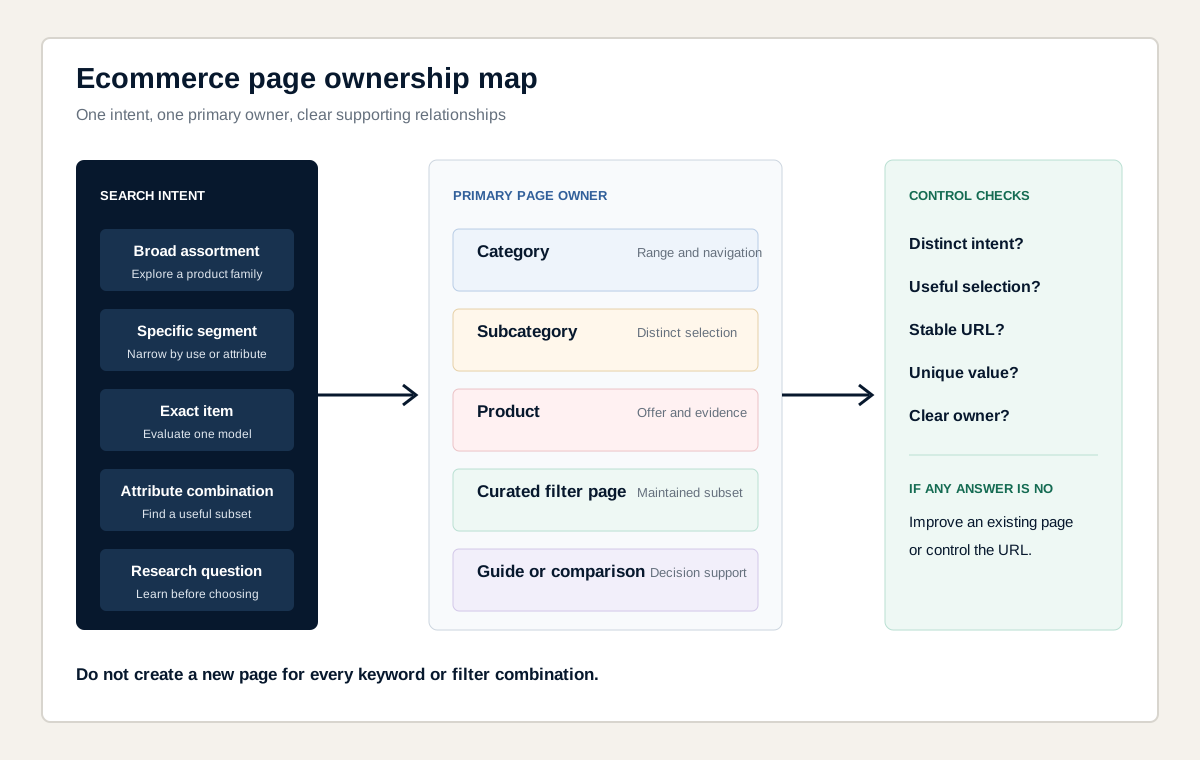
Each independent search intent should have one primary page type that can satisfy it better than the alternatives. The ownership decision starts with what the searcher wants to compare or buy, not with the words already used in the catalog.
| Search intent | Primary owner | Example pattern | Avoid |
|---|---|---|---|
| Broad product family | Category | Running shoes | Forcing one product to represent the full choice |
| Specific segment | Subcategory | Trail running shoes | Thin subcategories with the same selection |
| Exact item or model | Product | Brand model and specification | Multiple competing variant URLs |
| Useful attribute combination | Curated filter landing page | Waterproof trail shoes for women | Indexing every generated combination |
| Brand assortment | Brand or collection page | Brand running shoes | Empty manufacturer pages |
| Research or comparison | Guide or comparison page | How to choose trail shoes | Turning a category into a long general article |
This map prevents cannibalization and gives merchandising, content and development teams one shared rule. Similar keywords can belong on one strong page. A separate URL is justified only when the product selection, decision criteria and search result pattern are meaningfully distinct.
How should category and subcategory pages be optimized?
A category page should help customers understand the assortment, narrow their choice and reach suitable products while clearly representing the commercial topic. Its title, heading, introduction, filters, product grid, guidance, proof and internal links should work as one decision surface.
Useful category copy explains selection criteria that cannot be inferred from product names alone. It can clarify use cases, compatibility, sizes, materials, delivery, expert selection or common trade-offs. It should not push the product grid far below generic paragraphs written only to repeat keywords.
- Use one clear category purpose and avoid overlapping parent and child pages.
- Expose relevant products and links in crawlable HTML.
- Keep product counts, availability and claims accurate.
- Add concise guidance near the decision point and deeper help where it remains useful.
- Link to relevant subcategories, brands, guides and complementary categories.
- Measure the page by both search visibility and its contribution to product discovery and revenue.
How should ecommerce product pages be optimized?
A product page should identify one purchasable item or coherent variant family and answer the questions needed to evaluate it. Strong product pages combine accurate first-party data with useful explanations, original media, availability, delivery, returns, reviews and alternatives.
Manufacturer descriptions can be a source, but publishing the same text as every reseller adds little decision value. Enrich the page with verified dimensions, compatibility, use guidance, comparison criteria, expert notes, care instructions and actual product imagery where available. Never invent testing, customer experience or specifications.
Titles and headings should identify the product naturally. Product identifiers such as brand, SKU, GTIN or MPN should be consistent where applicable. Variants need a clear relationship, stable URLs where required and an intentional canonical strategy. The future product-page guide will cover individual templates in more depth without replacing this service scope.
How should variants, filters and sorting URLs be handled?
Variants, filters and sorting URLs need an explicit policy because they can improve product discovery or create almost unlimited crawl combinations. The right rule depends on search demand, stable inventory, page usefulness, platform behavior and the ability to maintain internal links and metadata.
| URL type | Default decision | When an exception may be useful |
|---|---|---|
| Sort order | Do not treat as a separate landing page | Rarely, when it represents a real curated collection |
| Pagination | Keep products discoverable through crawlable navigation | Implementation depends on loading and canonical behavior |
| Single valuable filter | Evaluate for a curated landing page | Distinct demand, useful inventory and unique decision value |
| Multiple arbitrary filters | Control crawling and indexation | Only a selected, maintained combination should become a page |
| Product color or size | Model as a variant relationship | Separate URL when the variant has unique demand and content |
| Tracking or session parameter | Never create an indexable page | No commercial search exception |
Canonical tags alone are not a complete crawl-control system. Navigation, internal links, parameters, robots rules, sitemaps and server behavior must agree. Test changes with crawl data and representative URL samples before applying them to the complete catalog.
Which ecommerce URLs should be indexed?
An ecommerce URL should be indexed when it represents a stable, useful and distinct destination that the store wants searchers to reach. Indexation is an editorial and commercial decision supported by technical controls, not an automatic property of every URL the platform can generate.
| Condition | Indexable page requirement | Control question |
|---|---|---|
| Distinct intent | The page serves a demand not already owned elsewhere | Would search results expect a separate destination? |
| Useful selection | Products and guidance help the customer decide | Does the page remain useful when inventory changes? |
| Stable URL | The address, canonical and internal links remain consistent | Can the team maintain this URL for the long term? |
| Unique value | The page adds more than a changed heading or filter label | What information gain does this page provide? |
| Operational ownership | A team monitors stock, copy, links and data quality | Who fixes the page when the assortment changes? |
How should out-of-stock, discontinued and seasonal products be handled?
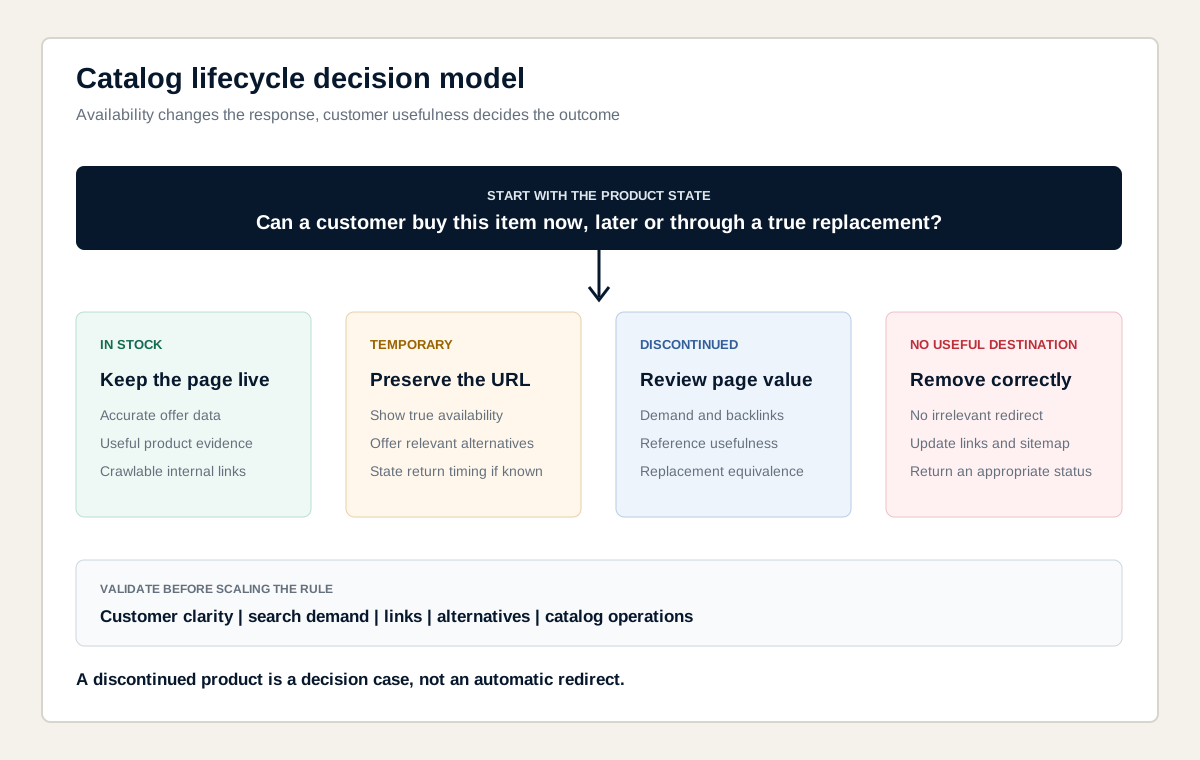
Product lifecycle decisions should protect customer clarity, useful search history and internal link quality. One blanket rule for every unavailable item creates unnecessary redirects, dead ends or misleading pages.
| Catalog state | Preferred response | Required page signal |
|---|---|---|
| Temporarily out of stock | Keep the page when the item will return | Accurate availability, expected return if known and alternatives |
| Discontinued with direct replacement | Keep for comparison or redirect after evidence review | Clear status and genuinely equivalent replacement |
| Discontinued without replacement | Keep useful reference content or return an appropriate removal status | No fake availability or irrelevant redirect |
| Seasonal product | Preserve a durable URL between seasons when demand recurs | Current availability and expected seasonal context |
| Variant unavailable | Keep the family page and mark the exact variant correctly | Selectable alternatives and consistent variant data |
How should internal links and site architecture work?
Internal links should let customers and crawlers move from broad departments to categories, subcategories and products without depending on site search or non-crawlable interactions. Important commercial pages need regular links from relevant navigation, parent pages, guides and related products.
Breadcrumbs clarify hierarchy, while contextual links explain relationships such as alternatives, accessories, compatibility and buying guidance. An XML sitemap helps discovery and monitoring, but it does not replace a navigable site structure. The internal linking guide explains crawlable anchors and auditing in more detail.
Which structured data and product feeds matter?
Product structured data and merchant feeds should describe the same real offer that customers can see on the page. Depending on eligibility and implementation, useful fields can include product name, image, description, identifiers, brand, price, currency, availability, condition, shipping, returns, reviews and variants.
Google distinguishes product snippets from merchant listing experiences. Merchant listings require offer information because the page represents a seller. Google also recommends placing Product structured data in the initial HTML for best results and can use merchant data from multiple sources. Valid markup supports understanding and eligibility, but it does not guarantee a rich result or ranking.
Use supported Schema.org types and validate representative templates. Do not mark a category as one Product, hide contradictory prices in markup or add ratings that are not visibly supported. Feed, HTML and structured-data monitoring should be part of catalog operations.
How do Merchant Center and organic Search work together?
Merchant Center and on-page SEO are complementary sources of product information. A feed can provide timely catalog attributes for Google surfaces, while crawlable product and category pages provide the destination, visible evidence, internal context and organic search experience.
Use consistent identifiers and schedule checks for rejected items, price mismatches, availability mismatches and destination errors. A healthy feed cannot compensate for inaccessible or unhelpful pages. Strong pages also do not remove the need for accurate merchant data when a shopping program requires it.
How should ecommerce SEO support AI search and product discovery?
Ecommerce SEO supports AI search by making products, brands, categories, experts and commercial claims explicit and verifiable on public pages. AI systems may use search indexes, crawlers, product data and third-party sources differently, so visibility must be tested per system rather than inferred from Google rankings.
Useful source material includes precise product attributes, comparison criteria, policies, first-party expertise, original images, current availability and clear Organization, Product and Person relationships where appropriate. GEO services add fixed-prompt monitoring, source citation review and entity consistency. No optimization can guarantee an AI recommendation.
How does international ecommerce SEO work?
International ecommerce SEO connects market-specific demand with the correct store version, assortment, currency, delivery promise and commercial policies. One English catalog may serve several countries, but separate market pages are justified only when customers receive materially different information or offers.
Architecture may use folders, subdomains or country domains. Hreflang can connect genuine language or regional alternatives, while each indexable page normally needs a coherent canonical. Product availability, shipping, returns, tax, legal claims and Merchant Center settings must match the served market. The international SEO service covers market selection and rollout governance in depth.
Which ecommerce platforms can Jakency support?
Jakency can support Shopify, WooCommerce, Adobe Commerce or Magento, BigCommerce and custom ecommerce platforms. Platform knowledge matters because themes, apps, routing, rendering, feeds and deployment options affect implementation. The commercial and semantic model still comes first.
| Platform context | Typical review focus |
|---|---|
| Shopify | Collections, products, variants, theme rendering, apps, markets and feeds |
| WooCommerce | Taxonomies, attributes, plugins, templates, performance and WordPress governance |
| Adobe Commerce or Magento | Layered navigation, store views, canonical rules, scale and release processes |
| BigCommerce | Categories, faceted search, themes, product data and multi-storefront setup |
| Custom commerce | Rendering, routing, APIs, product models, testing and technical ownership |
How should an ecommerce migration be managed?
An ecommerce migration should preserve valuable URLs, content, internal relationships, product data and measurement while the platform changes. It needs a complete URL inventory, redirect map, template specification, pre-launch crawl, analytics QA and post-launch monitoring.
- Baseline important queries, pages, revenue, indexation and crawl behavior.
- Freeze the ownership map for categories, products, brands and selected filters.
- Map every valuable legacy URL to the closest relevant destination.
- Validate templates, canonicals, robots directives, structured data and feeds.
- Crawl the staging environment and test representative customer journeys.
- Launch with redirects, sitemaps, analytics annotations and rapid issue ownership.
- Monitor old and new URLs, search performance, transactions and server logs.
The website migration guide provides the broader migration process. Large stores also need catalog-specific sampling because checking only the homepage and a few products can miss systemic template failures.
How is ecommerce SEO measured?
Ecommerce SEO is measured from query to landing page, product discovery and commercial result. Rankings are diagnostic signals. Revenue becomes meaningful only when availability, margin, attribution, returns and customer quality are considered.
| Layer | Metrics | Decision supported |
|---|---|---|
| Search visibility | Queries, impressions, clicks, CTR and landing pages | Where demand and snippet opportunities change |
| Technical health | Indexation, crawl patterns, valid templates and feed issues | Which systemic barrier to fix first |
| Shopping behavior | Product views, filters, add-to-cart and checkout progress | Whether organic visitors find suitable products |
| Commercial result | Transactions, revenue, margin, new customers and returns | Which pages and categories create valuable growth |
| Assisted value | Organic touchpoints before later purchase or another channel | How SEO contributes beyond last-click revenue |
| AI visibility | Mentions, product citations, source accuracy and referrals | How generative systems represent the store |
Segment by category, page type, country, device and new versus returning customers. Record deployments, promotions, stock changes and tracking releases so trend changes can be interpreted. Search Console and analytics use different measurement systems and should not be expected to report identical totals.
What does Jakency deliver?
Jakency delivers a controlled set of decisions, specifications and implementation assets. Each output has an owner, acceptance criteria and a measurement link, so the engagement does not end with an unprioritized audit document.
- Management summary with current constraints and commercial priorities.
- Query, entity and page ownership map for core catalog areas.
- Indexation policy for categories, products, variants, filters and parameters.
- Technical requirements for templates, rendering, canonicals, sitemaps and redirects.
- Category and product content rules with representative optimized examples.
- Structured-data and merchant-feed validation requirements.
- Internal linking, authority and supporting-content roadmap.
- Measurement dashboard, release log and recurring review process.
Who owns ecommerce SEO inside the client organization?
Ecommerce SEO needs shared execution with one accountable owner. SEO can define requirements and priorities, but merchandising, development, content, analytics and leadership control essential inputs.
| Role | Primary responsibility | Shared decision |
|---|---|---|
| Business or ecommerce lead | Commercial priorities, margin, assortment and promotions | Which catalog areas deserve investment |
| SEO consultant or agency | Research, architecture, requirements, QA and measurement | Which intent each page should own |
| Merchandising | Categories, products, stock, attributes and collections | How search demand maps to customer choice |
| Development | Templates, routing, rendering, releases and monitoring | How policies become stable platform behavior |
| Content and brand | Useful copy, imagery, claims and editorial quality | How pages remain accurate and distinctive |
| Analytics | Events, revenue, consent, dashboards and data QA | How commercial impact is interpreted |
Which ecommerce SEO engagement model fits?
The right engagement model depends on the current constraint and the client team's capacity to implement. Jakency can work as an ecommerce SEO consultant, a specialist partner to internal teams or a managed ecommerce SEO company for a defined workstream.
| Model | Best fit | Typical scope |
|---|---|---|
| Ecommerce SEO audit | Store with unclear technical and commercial priorities | Baseline, diagnosis, issue model and action plan |
| Strategy and roadmap | Team preparing a catalog redesign, market entry or growth plan | Ownership map, architecture, policies and sequencing |
| Consultancy and QA | Internal team that can build and publish | Requirements, reviews, testing and decision support |
| Managed program | Store needing ongoing research, content and technical coordination | Priorities, implementation support, reporting and iteration |
How much do ecommerce SEO services cost?
Ecommerce SEO cost is determined by catalog size, template count, technical debt, platform access, countries, content production, data quality, migration risk, internal capacity and reporting depth. URL count alone is a poor pricing model because one template fix can improve many pages while one strategic category can require extensive research and implementation.
A scoped proposal should state which catalog areas and systems are included, what Jakency implements, what the client implements, how many representative templates are reviewed, what evidence is needed and how results are measured. Work can begin with a focused audit or one priority category before expanding.
What should an ecommerce SEO proposal include?
An ecommerce SEO proposal should make scope, ownership, dependencies and measurement explicit. Generic promises of more traffic or a fixed number of keywords do not explain how the store will actually change.
| Proposal element | What should be explicit | Risk when missing |
|---|---|---|
| Catalog scope | Markets, platforms, categories, templates and URL samples | The audit and implementation cover different stores |
| Technical ownership | Requirements, development, deployment and acceptance testing | Recommendations remain unbuilt or unverified |
| Content delivery | Research, briefs, writing, product data, review and publishing | A brief is mistaken for a live optimized page |
| Data access | Search Console, analytics, merchant feeds, CRM and margin context | Traffic is reported without commercial interpretation |
| Quality standard | Validation rules for pages, markup, feeds and customer claims | Volume replaces accuracy and usefulness |
| Review rhythm | Baseline, release log, reporting periods and decision owners | Changes cannot be connected with outcomes |
Why choose Jakency as your ecommerce SEO company?
Jakency provides founder-led ecommerce SEO with direct access to Jan Kenis, who founded Jakency in 2013 and works as an SEO, GEO and AI consultant. The approach connects strategy with implementation, page creation, technical QA and measurement instead of separating recommendations from the system that must deliver them.
Jakency works from Belgium for clients and online audiences in the Netherlands, the United States, the United Kingdom and other markets. Claims are tied to available evidence, and unknown results are labeled as future measurement rather than presented as proof. Review projects and cases to see the exact role and evidence available per project.
Which sources support the technical guidance?
The technical recommendations were checked on August 17, 2026 against Google Search Central documentation. Search features, merchant programs and platform behavior can change, so implementation should include a current validation step.