
Published on
What does an international SEO agency do?
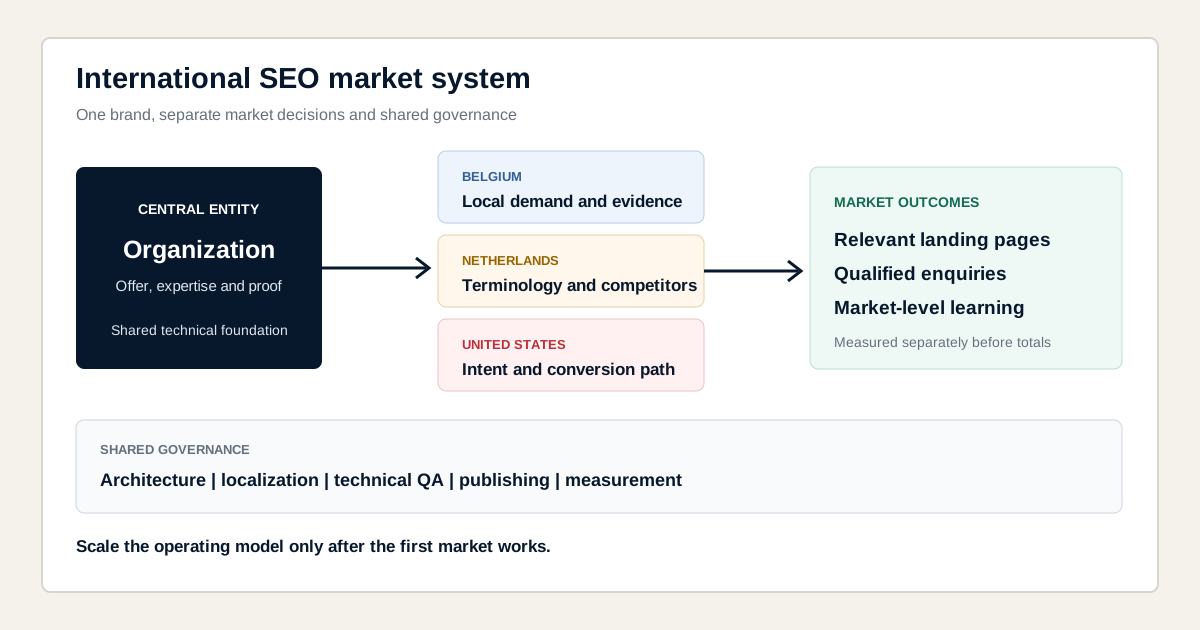
An international SEO agency turns cross-border expansion goals into a market, website and content system that search engines and customers can understand. It decides where demand is commercially relevant, which URLs should serve each market, what must be localized and how performance will be measured.
Jakency combines SEO services, technical implementation, content strategy, authority and Generative Engine Optimization. The work can cover one new country, several English-speaking markets or a multilingual rollout.
When is international SEO right for your business?
International SEO is right when your company can actually serve customers in another country and organic search can support that market entry. Search volume alone is not enough. The offer, sales process, delivery, language support and commercial value must also fit.
- You already receive qualified enquiries or Search Console impressions from another country.
- Your product or service can be sold and supported across borders.
- The new market uses different terminology, competitors or buying criteria.
- One global page ranks weakly because it does not answer regional intent.
- Country and language versions compete or send users to the wrong offer.
- Your team needs one rollout plan across marketing, development, sales and local reviewers.
A market should usually wait when fulfilment, legal requirements, customer support or local proof remain unresolved. SEO can reveal demand, but it cannot repair a market offer that the business cannot deliver.
How is international SEO different from multilingual SEO, local SEO and GEO?
International SEO owns the country and market-expansion decision. Multilingual SEO owns language adaptation, local SEO owns visibility around physical or service locations, and GEO adds visibility analysis for generative search and answer systems.
| Discipline | Central question | Typical output |
|---|---|---|
| International SEO | Which markets and regional pages should we prioritize? | Market roadmap, architecture and rollout |
| Multilingual SEO | How should each language version express local intent? | Localized keywords, pages and language QA |
| Local SEO | How do locations appear in local and map results? | Location pages, profiles, citations and reviews |
| GEO | How is the organization represented and cited in AI answers? | Source pages, entity clarity and AI visibility measurement |
Which country or region should you target first?
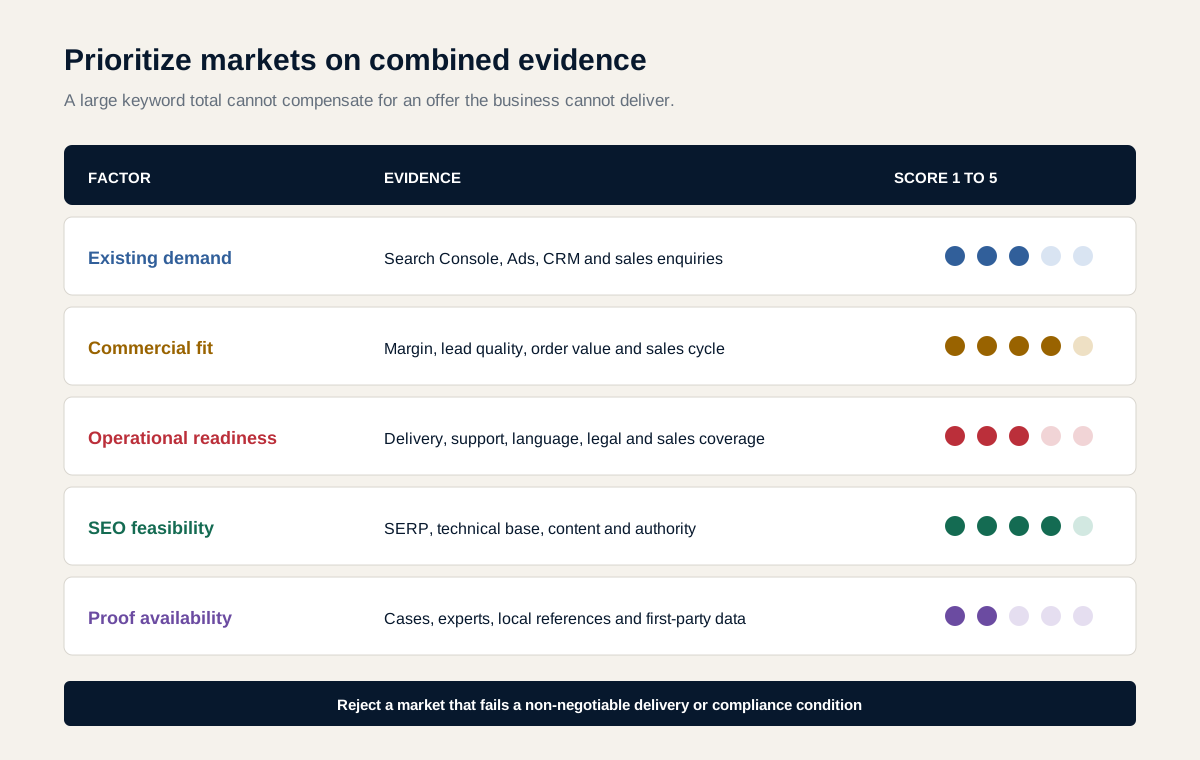
Target the market with the strongest combination of existing traction, commercial fit, deliverability, competitive feasibility and evidence. A high-volume country is not automatically the best first investment.
| Factor | Question | Useful evidence |
|---|---|---|
| Existing demand | Are people already finding or asking for the offer? | Search Console, Ads search terms, CRM and sales |
| Commercial fit | Can this market produce valuable customers? | Margins, order value, lead quality and sales cycle |
| Operational readiness | Can the business sell, deliver and support locally? | Logistics, language, support and legal review |
| SEO feasibility | Can the site offer something competitive and credible? | SERP, content, authority and technical condition |
| Proof availability | Do we have relevant cases, experts and source material? | Projects, reviews, authors and first-party data |
A practical scoring model gives each factor a value from one to five, documents the evidence and rejects any market that fails a non-negotiable operational condition. The score supports a decision. It does not predict rankings or revenue.
Which international SEO services does Jakency provide?
Jakency provides international SEO services from market diagnosis through implementation and reporting. A project uses only the workstreams required by the current expansion stage.
| Service area | Work performed | Deliverable |
|---|---|---|
| Market opportunity analysis | Compare demand, traction, competitors, commercial fit and readiness | Prioritized country and region shortlist |
| International keyword research | Research queries, entities, intent and SERP page types per market | Market-level keyword and intent map |
| Website architecture | Choose folders, domains or subdomains and define stable URL ownership | Architecture and migration requirements |
| Technical international SEO | Audit crawlability, canonicals, hreflang, redirects, sitemaps and templates | Technical specification and QA log |
| Localized content | Adapt service pages, evidence, terminology, internal links and conversion paths | Page briefs or publication-ready pages |
| Authority development | Identify credible market-relevant sources, mentions and digital PR opportunities | Local authority and outreach plan |
| Measurement | Segment Search Console, analytics, leads and revenue by market and page | Dashboard, baseline and review rhythm |
| Governance | Assign approvals, updates, technical ownership and local review | Responsibility matrix and publishing checklist |
How do you research search demand in each market?
Research each market as its own search environment. Start with first-party queries, sales language and local SERPs, then use keyword tools to expand the vocabulary and compare demand. A translated source keyword is only a hypothesis.
- Separate current queries, landing pages and conversions by country.
- Collect terminology from customers, sales calls, support and local experts.
- Research commercial, informational, comparison and branded query clusters.
- Inspect the ranking page types and entities in the target country.
- Compare the cluster with existing pages and identify true intent gaps.
- Map every independent intent to one primary regional or global URL.
- Prioritize by business value, traction, evidence and feasibility.
This approach prevents the common mistake of publishing a country page for every keyword variant. The existing keyword research process provides the broader clustering method.
Which international website structure should you choose?
Choose the structure that gives every market one stable, crawlable URL and that your organization can maintain. Google documents country domains, subdomains and subdirectories as recognizable structures with different trade-offs.
| Structure | Best fit | Main trade-off |
|---|---|---|
example.de | Distinct country brand, offer and local operation | Separate domain authority, systems and maintenance |
de.example.com | Markets managed in separate platforms or teams | More technical separation and governance |
example.com/de/ | Shared brand and platform across markets | Country and language intent must stay explicit |
| URL parameters | Rarely suitable as the primary locale structure | Harder segmentation and less transparent URLs |
There is no universal winning format. Review domain history, authority, CMS limitations, legal ownership, localization teams and migration risk before changing architecture. Avoid rebuilding a functioning international site only because another structure looks cleaner.
How should hreflang, canonicals and locale URLs work together?
Each indexable locale page should normally have a stable URL, a self-referencing canonical and reciprocal hreflang links to genuine alternatives. Google recommends separate locale URLs because pages that change content only from a perceived location or browser language may not be fully crawled.
- Use valid language codes and add a region only when the page truly targets that region.
- Connect equivalent alternatives and keep their references reciprocal.
- Do not canonicalize every translated page to one source-language URL.
- Keep important locale pages crawlable and present in internal links and sitemaps.
- Use
x-defaultfor a genuine fallback or selector page where appropriate. - Do not force every visitor through an irreversible IP or language redirect.
Google also states that it determines page language algorithmically rather than relying on hreflang or the HTML lang attribute alone. Visible content must therefore make the language and intended audience clear.
How do you localize content beyond translation?
Localization changes the page where market intent, proof and decision criteria differ. It can adapt terminology, spelling, currency, units, regulations, availability, examples, service areas, objections, trust signals and calls to action.
Keep facts about the organization and people consistent across countries. Change market-specific attributes only when the difference is real. The multilingual SEO service covers language research, localization workflows and review in more depth.
How do you build authority in a new country?
Build authority by earning relevant local references and demonstrating that the business can genuinely serve the market. Useful signals can include local partnerships, customers, associations, publications, expert contributions, directories and digital PR based on real evidence.
Do not copy a competitor backlink list and contact every domain. Review editorial relevance, audience, source quality and the reason your organization deserves a mention. A smaller number of credible market relationships can be more useful than large batches of generic placements.
How does GEO support international search visibility?
GEO supports international SEO by checking how AI search and answer systems describe the organization, services and evidence in each priority market. Language, available web access, sources and answers can differ by system and location.
Track AI visibility separately from Google Search performance. Use fixed market-specific prompts, record mentions and citations, review factual accuracy and compare sources over time. An organic Google ranking does not guarantee a citation in ChatGPT, Perplexity or another generative system.
How does an international SEO rollout work?
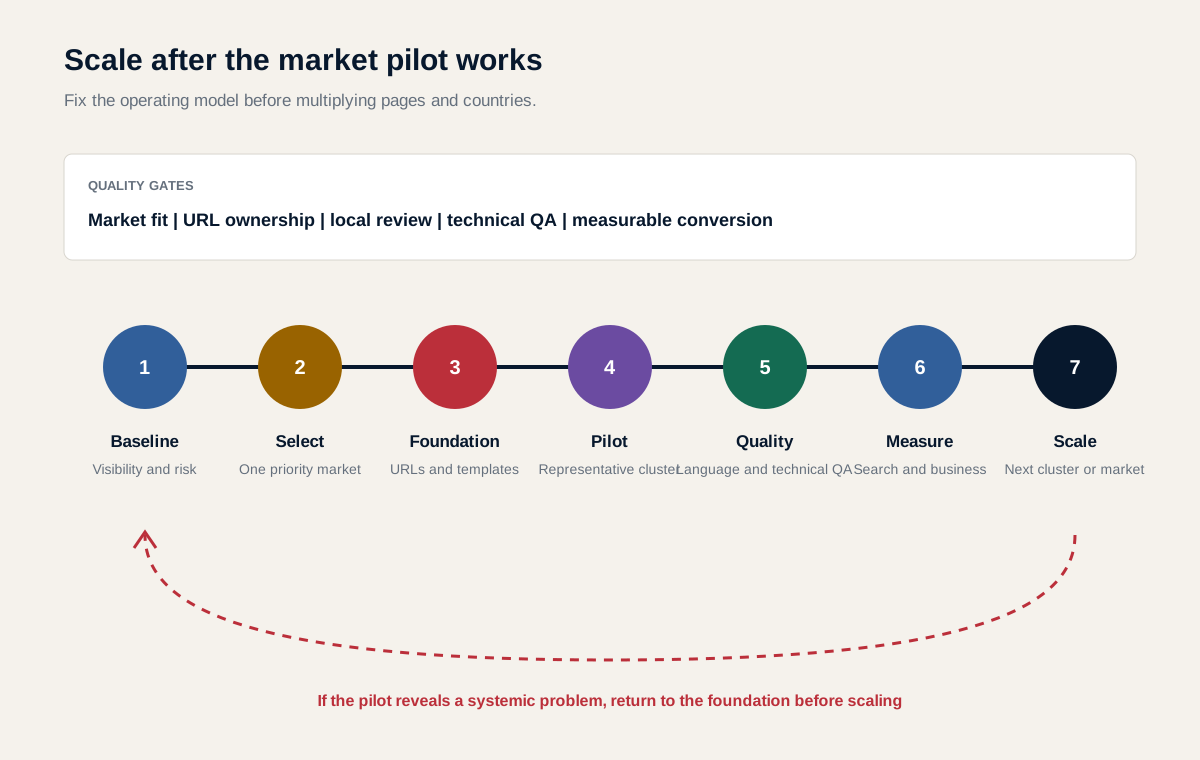
An international rollout works best as a controlled sequence: diagnose, select one priority market, establish the shared foundation, launch a representative page set, measure quality and scale only when the operating model works.
- Baseline current visibility, leads, architecture and technical risks.
- Select the first market and define success, exclusions and operational dependencies.
- Approve URL ownership, templates, hreflang, canonicals and measurement.
- Build or improve the first commercial and supporting page cluster.
- Run language, technical, brand, legal and conversion quality checks.
- Publish, verify indexability and review market-level performance.
- Fix systemic issues before adding the next market or larger content batch.
What does an international SEO engagement deliver?
An engagement delivers decisions and implementation assets rather than a generic global keyword export. The scope is documented per market, page type, technical system and owner.
| Deliverable | Decision supported |
|---|---|
| Market opportunity matrix | Where to invest first and which markets to postpone |
| International keyword and entity map | Which intent belongs to which market page |
| URL and technical specification | How variants remain crawlable, canonical and connected |
| Localized page briefs | What each page must answer, prove and convert |
| Internal link and authority plan | How each market cluster gains context and support |
| QA and governance checklist | Who reviews language, facts, code and publication |
| Market dashboard and review log | What changed, what happened and what comes next |
Who owns international SEO inside the organization?
International SEO needs one accountable program owner and explicit input from market, content, development, sales and compliance teams. Unclear ownership creates inconsistent pages, slow approval and technical regressions.
| Role | Primary responsibility |
|---|---|
| Management or growth lead | Market priority, budget, offer and success criteria |
| SEO lead or agency | Research, architecture, briefs, QA and measurement |
| Local expert or reviewer | Terminology, cultural fit, facts and market relevance |
| Development team | Templates, URLs, rendering, hreflang, canonicals and releases |
| Sales and customer teams | Lead quality, objections and market feedback |
| Legal or compliance | Market-specific claims, policies and regulated content |
How do you measure international SEO performance?
Measure international SEO per market, language, landing page and business outcome before combining totals. Global traffic can rise while the priority market or qualified lead rate declines.
- Search Console clicks, impressions, CTR, positions, queries and pages by country.
- Indexed and valid locale URLs, hreflang coverage and technical issue patterns.
- Organic landing-page engagement, key events and revenue in analytics.
- Qualified leads, opportunities, sales and customer value in the CRM.
- Market-specific brand demand, earned mentions and relevant referring sources.
- Separate AI mentions, recommendations, citations and referral traffic where measured.
Record releases and external events so the team can interpret changes. Do not attribute a ranking movement to one edit without considering seasonality, competitors, search changes, links and measurement changes.
What determines the cost of international SEO services?
The cost is determined by countries, languages, URL volume, technical complexity, localization depth, local review, content production, authority work, reporting and internal implementation capacity. A strategy for one new market has a different scope from managing several mature regions.
| Collaboration model | Best fit | Typical focus |
|---|---|---|
| International SEO audit | Existing multi-market site with unclear risks | Diagnosis, architecture, technical issues and priorities |
| Market-entry strategy | Business selecting or preparing one new country | Opportunity, roadmap, URLs, pages and measurement |
| Consulting and QA | Internal team that researches and publishes | Direction, specifications, reviews and governance |
| Managed rollout | Company needing research through implementation | Content, technical work, authority and reporting |
Jakency provides a scoped proposal after reviewing the existing site, markets and responsibilities. The proposal states what is researched, delivered, implemented, reviewed and measured.
What should an international SEO proposal include?
An international SEO proposal should define the target markets, current evidence, deliverables, implementation ownership, local review, reporting and exclusions. A list of countries and a monthly fee are not enough to compare providers or control delivery.
| Proposal element | What should be explicit | Risk when missing |
|---|---|---|
| Market scope | Countries, languages, search engines, devices and business units | Research and reporting cover different realities |
| URL scope | Domains, folders, templates, page types and migration work | Technical responsibilities remain disputed |
| Content delivery | Research, writing, localization, expert review and publishing | A finished brief is mistaken for a published page |
| Authority work | Research, outreach, digital PR, local review and quality criteria | Link volume replaces relevance and evidence |
| Measurement | Baselines, dashboards, lead definitions, review periods and owners | Traffic is reported without commercial context |
| Dependencies | Development, legal, sales, translation and client approval capacity | Delays are blamed on SEO rather than unresolved inputs |
Ask how priorities change when real data contradicts the original plan. A reliable international SEO company should be able to pause a weak market, redirect effort to an existing page or fix a shared template before producing more content. The contract should also state who owns research, content, accounts and source files after the engagement.
Why work with Jakency as your international SEO company?
Jakency offers founder-led international SEO strategy with direct access to Jan Kenis, who founded Jakency in 2013 and works as an SEO, GEO and AI consultant. Projects connect strategy with page creation, technical implementation, measurement and AI search visibility.
Jakency works from Belgium for organizations targeting Belgium, the Netherlands, the United States and markets beyond them. The Padel N Play project provides a relevant international directory context, while Jakency's own Dutch and English site demonstrates a shared-domain language structure. These examples show scope and implementation, not a ranking guarantee.
Which sources support the technical guidance?
The technical recommendations were checked on August 13, 2026 against Google Search Central documentation. Search systems and interfaces can change, so implementation should include a current technical review.