
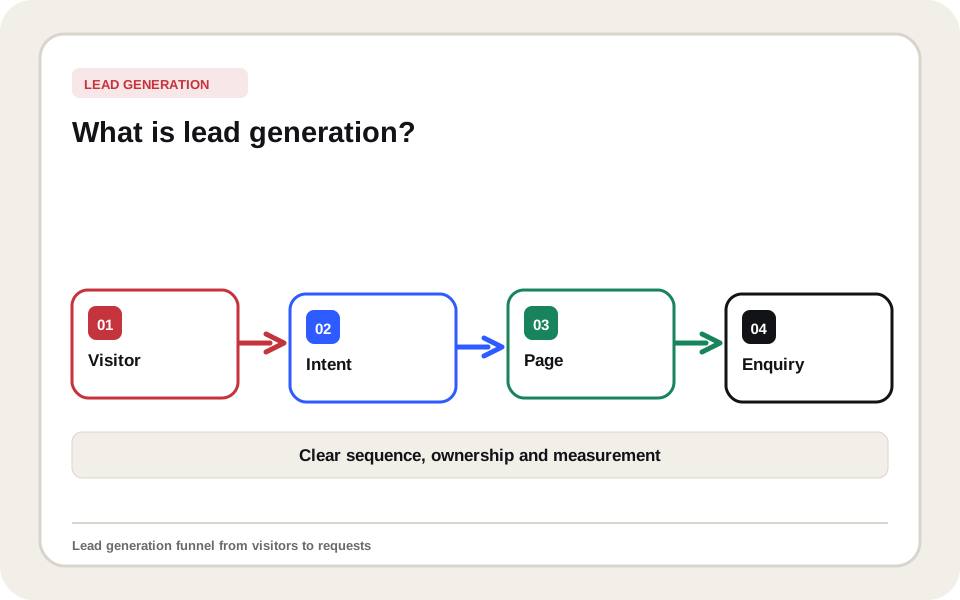
How does lead generation work?
Lead generation works by connecting demand, trust and action. First you reach people with a problem or need. Then you show why your solution is suitable. Finally, you make the step towards contact accessible and measurable.
A simple lead funnel consists of these steps.
- Reach the right target group through SEO, Google Ads, content or referral traffic.
- Answer the search question or pain directly on a relevant page.
- Show evidence with cases, reviews, examples or concrete results.
- Offer a clear call to action.
- Quickly follow up and qualify the lead.
Which channels generate leads?
The best channels depend on intent, timing and lead value. For many companies, a combination works better than one channel, because SEO builds sustainably and advertisements provide data faster.
Compare the most important channels like this.
| Channel | Strength | When to bet |
|---|---|---|
| what is SEO | Sustainable visibility without cost per click | When search query is structurally present |
| Google Ads | Direct traffic based on purchase intent | When speed and test data matter |
| conversion optimization | More requests from existing traffic | When you have traffic, but not enough good leads |
| create landing page | Convert visitors into requests in a targeted manner | When traffic comes, but converts too little |
| B2B lead generation | Focus on value per lead and longer sales cycles | When one good lead is worth a lot |
| Email and content | Building trust during longer decision-making processes | When prospects are not yet ready to contact |
What makes a lead qualitative?
A high-quality lead fits your offer, has a real need, can make decisions or influence and can be followed up in the short or medium term. A lead is therefore more than a completed form.
Assess leads with these criteria.
| Criteria | Good lead | Weak lead |
|---|---|---|
| Fit | Suits your service, region and target group | Is outside your range or work area |
| Intention | Has a specific problem or clear question | Only looking for free information without follow-up |
| Timing | Has a reasonable decision period | Is vague or only ever relevant |
| Value | Can generate profitable sales | Costs more follow-up than it yields |
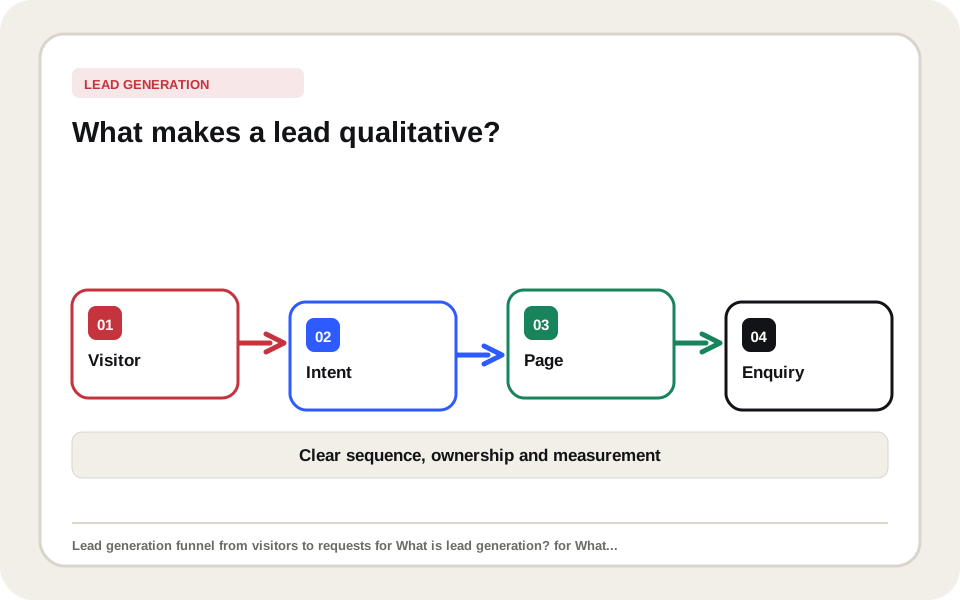
How do you increase conversion on a landing page?
You increase conversion by clearly aligning the promise, the evidence and the action. A strong landing page immediately confirms that the visitor is in the right place and then removes any doubts.
These elements belong on a converting page.
- A headline that immediately confirms the search intent
- A clear value proposition
- Evidence through cases, reviews, figures or concrete examples
- A form with as few required fields as possible
- A call-to-action that follows logically from the page
- Fast loading time and mobile usability
The case of Professional Prices shows how a price calculator first provides useful information and then leads to a quote request at the natural decision point.
In practice
More leads is not always better. Companies that only focus on numbers often receive many bad applications. We prefer to focus on lead quality: sharper messages, better qualification questions and faster follow-up result in less noise and more turnover per lead.
How do you measure lead generation?
You measure lead generation with more than just conversion rate. You want to know which channels bring leads, which leads are sellable and which requests ultimately generate sales.
Follow at least these measurement points.
- Visitors per channel and landing page
- Conversion rate per page
- Cost per lead on paid channels
- Lead quality and rejection reason
- Speed of follow-up
- Revenue or pipeline value per channel
How do you combine SEO and Google Ads for leads?
You combine SEO and Google Ads by using ads for speed and SEO for sustainable growth. Google Ads quickly shows which keywords are converting. what is SEO then builds organic visibility around the same intents.
This combination is especially effective when you use advertising data to improve your content, landing pages and internal links.
International lead generation can combine SEO, GEO, Google Ads and ChatGPT advertising around one commercial demand map, provided channel delivery and final lead quality are measured separately.