
Why does a sitemap count?
A sitemap is not a ranking factor, but it is an indexing tool: it shows Google the way to your pages. You submit it via Google Search Console. For deep pages, a good internal link structure remains at least as important.
What should you know about XML sitemap?
| Quick fact | Detail |
|---|---|
| Also called | sitemap.xml, SEO sitemap, sitemap file |
| Primary source | Google Search Central documentation about creating and submitting sitemaps |
How does an XML sitemap work in practice?
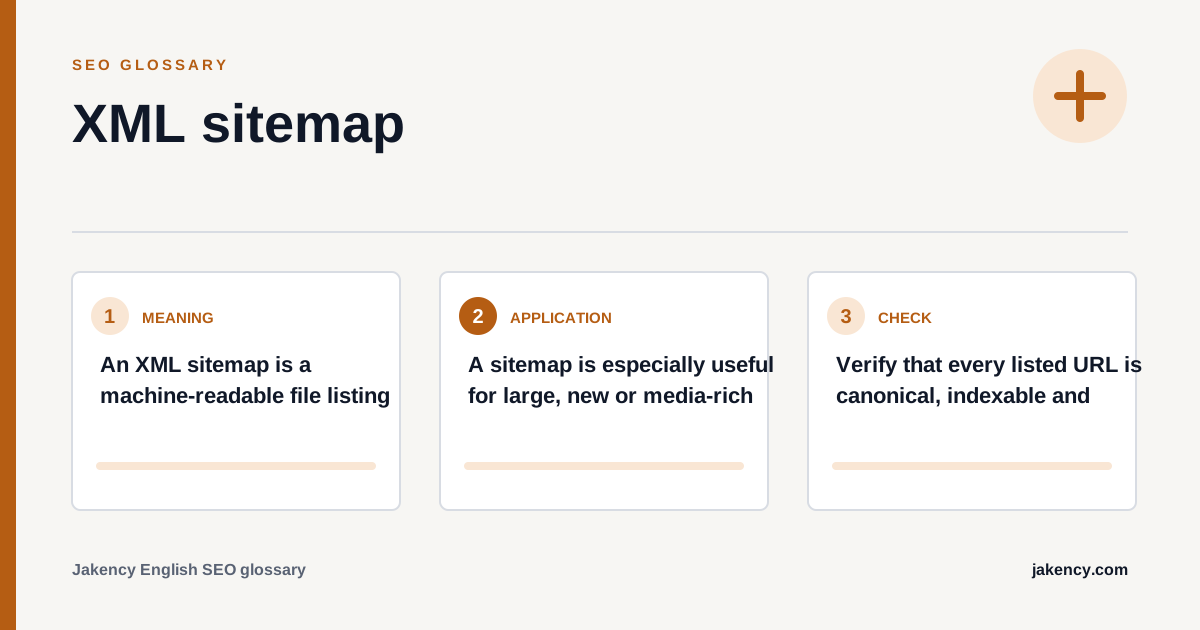
A sitemap is especially useful for large, new or media-rich websites and for pages that are difficult to discover through internal links. It does not replace clear site architecture.
- Select indexable URLs: Include only canonical pages that should genuinely appear in search results.
- Generate valid XML: Use absolute URLs, correct encoding and split large files according to protocol limits.
- Use lastmod carefully: Update the date only when the main content changes meaningfully.
- Publish and declare it: Use a stable location and reference the sitemap in robots.txt or Search Console.
- Analyze by page type: Separate important templates into sitemaps so indexing problems can be isolated.
How do you check an XML sitemap?
Verify that every listed URL is canonical, indexable and accessible. Submit the sitemap in Search Console and compare the number of discovered and indexed URLs.
- All URLs use the preferred protocol and intended hostname.
- Every URL returns 200 and is not excluded with noindex.
- Canonical tags match the URLs listed in the sitemap.
- lastmod values reflect genuine content changes.
- Large sitemap sets use a valid sitemap index.
- Search Console can fetch and process the file.
Which mistakes should you avoid with an XML sitemap?
Do not include redirects, 404 pages, noindex URLs or non-canonical variants. A sitemap should confirm the website's preferred URL set.
| Mistake | Why it matters |
|---|---|
| Including every discovered URL | Filters, parameters and redirects weaken the signal about the desired index. |
| Refreshing lastmod every day | An unreliable modification date does not help search engines prioritize crawling. |
| Treating the sitemap as navigation | Important pages must also be reachable through normal crawlable links. |
How do you evaluate an XML sitemap?
Submitting a sitemap does not guarantee indexing. Use reports to investigate differences between submitted, discovered and indexed URLs for each page type.
| Signal | Interpretation |
|---|---|
| Fetch and processing status | Search Console reports syntax, accessibility and protocol issues. |
| Submitted versus indexed | A large gap calls for analysis of quality, duplication, canonicals or crawlability. |
| Errors by sitemap | Separate files reveal which template or content type produces problems. |
How does an XML sitemap relate to other SEO concepts?
XML sitemap rarely operates in isolation. Use the related concepts below to connect this definition with the next technical, content or measurement decision for your website, audience and market.
- robots.txt: Robots.txt is a public text file at the root of a host that tells specified crawlers which paths they may or may not request.
- canonical tag: A canonical tag is an HTML link element that identifies the URL a website considers the preferred version of identical or very similar content.
- Google Search Console: Google Search Console is a free Google service that helps website owners monitor search performance, indexing and technical signals for their website in Google Search.
What is this explanation based on?
The definition and the checks on this page follow the primary source listed at the top. The practical recommendations combine that documentation with page-level SEO analysis. Where the documentation makes no statement, the page says so instead of assuming one.
More questions about XML sitemap
Does an XML sitemap guarantee indexing?
No. A sitemap helps search engines discover URLs and understand preferences, but they still decide whether a page is crawled and indexed.
How many URLs can one XML sitemap contain?
Under the sitemap protocol, one file can contain up to 50,000 URLs and must be no larger than 50 MB when uncompressed.
Does every website need an XML sitemap?
Not necessarily, but a correct sitemap is a useful discovery and diagnostic tool, particularly for growing or complex websites.