
How does SEA work?
With SEA you choose keywords, advertisements, budget and landing pages. When someone searches, an ad auction determines whether your ad appears and what you pay per click.
What is the difference between SEA and SEO?
| Aspect | SEA | SEO |
|---|---|---|
| Speed | Immediately visible | Grows over months |
| Costs | Cost per click | No media costs per click |
| Control | Budget, keywords and targeting | Content, technology and authority |
| Effect | Stops when budget stops | Can continue to render |
When do you choose SEA?
Choose SEA when you want quick leads, test a new offer or want to collect data on keywords that convert. The insights from Google Ads can then strengthen your SEO.
What does SEA cost?
SEA costs consist of click budget and management. The click price depends on competition, quality score and landing page. More explanation can be found at Google Ads costs.
What should you know about paid search?
| Quick fact | Detail |
|---|---|
| Also called | search engine advertising, PPC search advertising, search ads |
| Primary source | Google Ads Help documentation about the ad auction |
How does paid search work in practice?
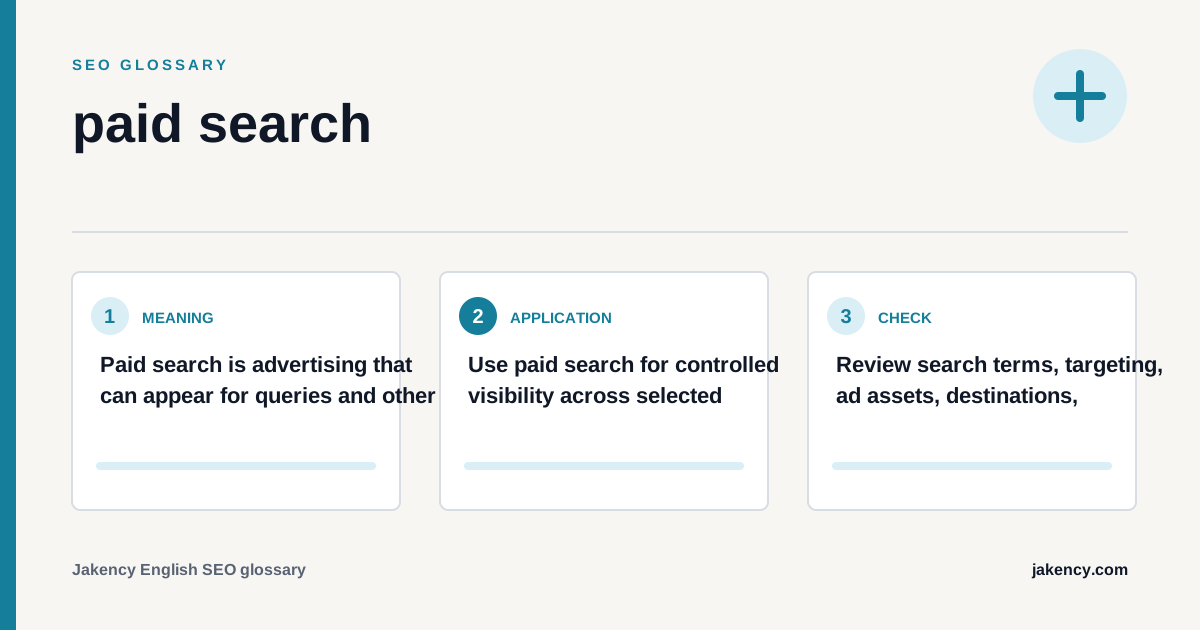
Use paid search for controlled visibility across selected queries, markets, locations and moments. Success requires relevant keywords, ads, landing pages, bidding and reliable conversion measurement.
- Define goals and value: Specify conversions, lead quality, margins and acceptable acquisition cost.
- Structure search intents: Group keywords and ads around clear products, services and decision stages.
- Build suitable landing pages: Align promise, offer, evidence and action with the search.
- Launch with control: Use deliberate targeting, negative keywords, budgets and bidding strategies.
- Optimize for outcomes: Analyze search terms, quality, conversions and revenue instead of only interface recommendations.
How do you check paid search?
Review search terms, targeting, ad assets, destinations, conversion actions and costs. A configured keyword list is not the same as the actual queries that triggered ads.
- Primary conversions and values are sent correctly.
- Actual search terms receive regular review.
- Location and language settings match the service area.
- Brand campaigns are reported separately from non-branded demand.
- Ad promise and landing page remain consistent.
- Media budget, management fee and platform cost are transparent.
Which mistakes should you avoid with paid search?
Do not optimize for clicks alone. Traffic without suitable intent, lead quality or profitability can consume budget without creating business value.
| Mistake | Why it matters |
|---|---|
| Buying an automatic top position | Ad auctions combine bid, quality, context and eligibility. Budget does not guarantee every impression. |
| Using broad match without control | Unrelated terms can spend budget when signals and exclusions are insufficient. |
| Blindly trusting platform conversions | Attribution windows, consent and duplicate tags can distort reported results. |
How do you measure paid search results?
Connect platform data with analytics, CRM and actual revenue. Optimize for business value and document differences between click, lead and sales attribution.
| Signal | Interpretation |
|---|---|
| Cost per qualified conversion | Combines media cost with validation of lead or order quality. |
| Conversion value and ROAS | Compares attributed revenue with ad spend under a defined model. |
| Search term quality | Shows how much budget serves relevant demand and how much goes to noise. |
How does paid search relate to other SEO concepts?
paid search rarely operates in isolation. Use the related concepts below to connect this definition with the next technical, content or measurement decision for your website, audience and market.
- SEM: SEM stands for Search Engine Marketing and describes marketing through search engines, although its exact scope varies by market and source.
- CTR: CTR stands for Click-Through Rate and is the percentage of impressions that result in a click.
- CRO: CRO stands for Conversion Rate Optimization: the systematic research and improvement of websites so more suitable visitors complete a desired action successfully.
What is this explanation based on?
The definition and the checks on this page follow the primary source listed at the top. The practical recommendations combine that documentation with page-level SEO analysis. Where the documentation makes no statement, the page says so instead of assuming one.
More questions about paid search
What is the difference between paid search and SEO?
Paid search buys ad exposure through an auction and stops when budget or campaigns stop. SEO improves organic visibility without paying per click but requires ongoing work.
Is paid search the same as Google Ads?
Google Ads is one platform that includes search ads. Paid search is the broader channel and also includes advertising on other search engines.
How quickly does paid search work?
Approved campaigns can receive impressions quickly, but reliable optimization requires correct tracking, enough data and iteration.