
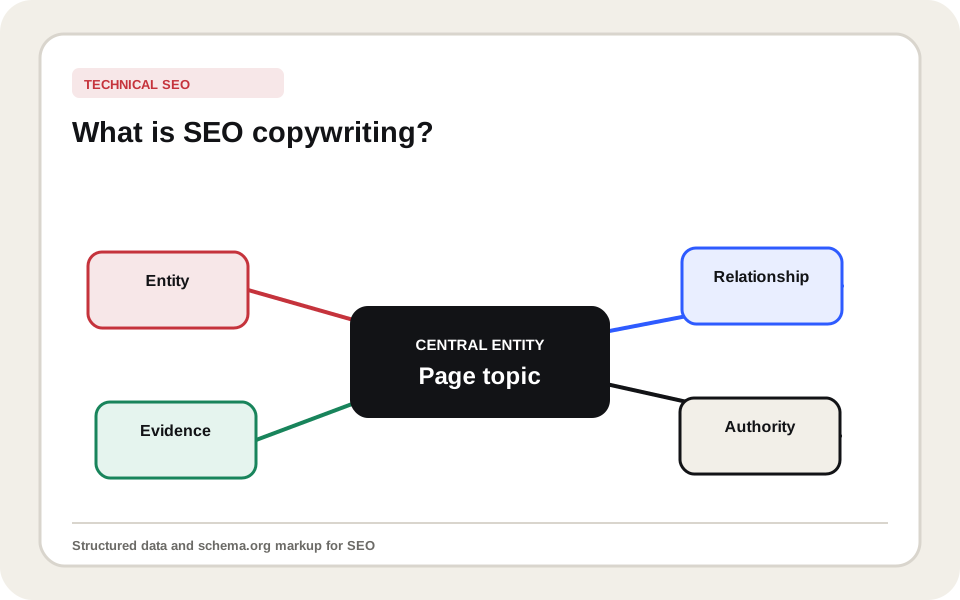
How do you write text that ranks?
Start with an answer-first introduction that immediately answers the main question, and then expand with logical H2s and H3s. That structure helps the reader scan and gives the search engine clear passages to index. Always start from thorough keyword research: you only know what to write when you know what people are searching for and with what intention.
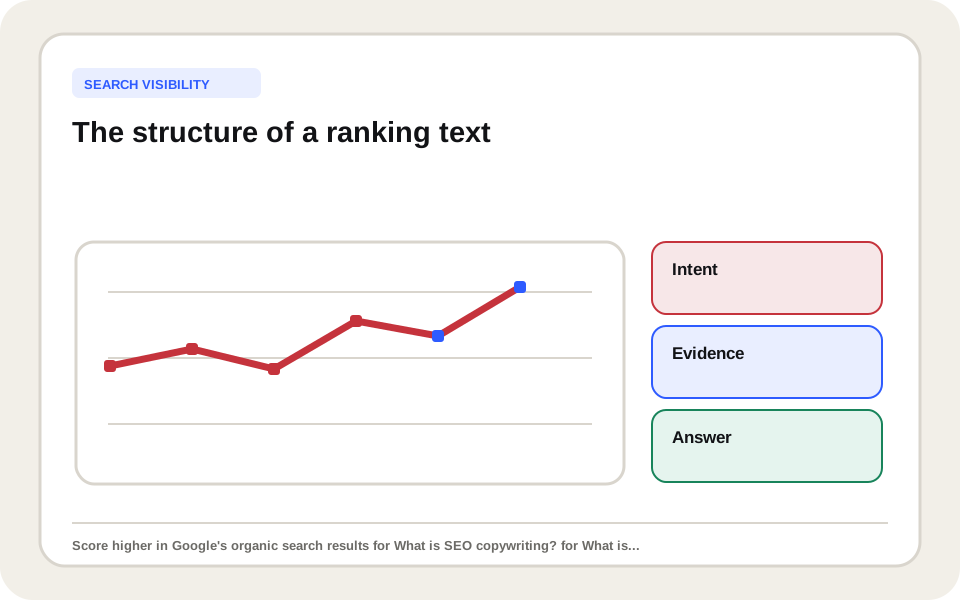
The structure of a ranking text
| Part | Function |
|---|---|
| Title and H1 | Contain the primary subject |
| Answer first intro | Answers the core question immediately |
| Headings and lists | Make the text scannable |
| Call to action | Gives the reader a next step |
Write for people, not for the algorithm. Google rewards content that really helps the reader, as described in the guidelines for useful content. Naturally, include your keyword in the title, the H1 and the first paragraph, and continue working with synonyms. One page belongs to one subject; You divide broader themes over multiple pages via your content strategy.
Common mistake
The mistake we see most often is leading too long before getting to the answer. Readers and AI models want the answer at the top; a page that takes three paragraphs loses both. Get the gist in the first two sentences and save the context for afterwards.
How do you use the AIDA model in SEO texts?
You use the AIDA model in SEO texts by putting attention, interest, preference and action in the correct order. The title tag and H1 attract attention. The intro answers the search question. Examples, evidence, and benefits build preference. The CTA will only then request action.
More information about the formula can be found at AIDA model. The main rule for writing SEO texts remains: first fill in the search intent, then convince.
Copywriting for humans, Google and AI
The same answer-first, factual style that ranks well also makes your text citable for AI search and answer engines. Anyone who writes clearly and concretely and supports their meaning with structured data and schema.org serves Google and AI at the same time. Strong copywriting is the core of on-page SEO and of your broader what is SEO.
How do you build a paragraph that also reads on its own?
By opening every paragraph with the answer and explaining afterwards. That sounds like a style rule, but it has a practical reason: search engines and AI systems display isolated passages. A paragraph that only claims something in its third sentence is unusable as a fragment.
| Order | Sentence | Works as a fragment? |
|---|---|---|
| Building up | Many businesses wonder what local SEO actually involves. The answer differs per situation. In practice it comes down to... | No, the first two sentences say nothing |
| Answer first | Local SEO makes a business findable for queries with a place-bound intention. That happens in two places: Google Maps and the regular results. | Yes, the first sentence stands alone |
Which words do you almost always cut?
The ones that promise without saying anything. They make text longer, vaguer and harder to verify, and they are the first thing a reader recognises as sales talk.
| Cut this | Replace with |
|---|---|
| Tailor-made, total solution, unique | What is concretely included |
| Years of experience | Since which year, and doing what |
| Competitive prices | An amount or a range |
| Fast delivery | A lead time |
| Highest quality | A verifiable property |
The right column is harder to write. That is exactly why it works: a competitor cannot copy it without having the same figures.
How long should a text be?
Long enough to answer the question completely, and not one sentence longer. There is no confirmed ideal length and no word count that earns a position. What counts is whether a reader is left with a question the page should have answered.
The practical test: read the query, read your page, and write down which questions went unanswered. None left means the page is long enough. One left means you add that section instead of stretching existing paragraphs.