
Why does the meta description count?
Google uses the meta description as an advertising line for your page. It influences your click-through rate directly: a compelling description gets more visitors from the same position. Write one per page, tailored to search intent, as part of your on-page SEO.
What should you know about meta description?
| Quick fact | Detail |
|---|---|
| Also called | description tag, meta description tag, search snippet description |
| Primary source | Google Search Central documentation about snippets and meta descriptions |
How does a meta description work in practice?
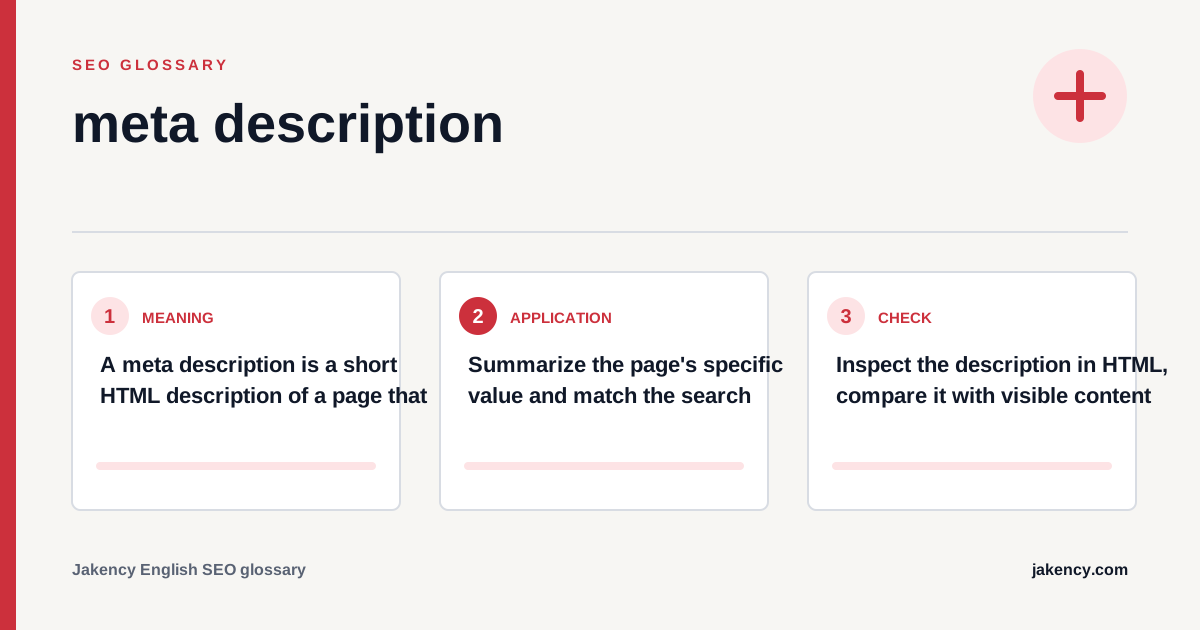
Summarize the page's specific value and match the search intent. Include relevant details such as topic, audience, location or offer only when the page supports them.
- Define the intent: Write for the main question and expectation the page addresses.
- Summarize the distinction: State what the user will find and why this result is useful.
- Use natural search language: Include recognizable terms without turning the description into a keyword list.
- Make it page-specific: Avoid generic text duplicated across dozens of pages.
- Test performance: Compare CTR within similar query, position, country and device contexts.
How do you check a meta description?
Inspect the description in HTML, compare it with visible content and review which snippet Google actually shows for different queries.
- The description aligns with the title tag, H1 and main content.
- Important wording appears early and survives likely truncation.
- The text contains no unsupported prices, availability or promises.
- Every important page has a specific description.
- Quotation marks and templates do not create broken output.
- CTR is evaluated by query and position rather than as one total.
Which mistakes should you avoid with a meta description?
Google can select a passage from the page when it fits the query better. Treat the tag as a useful suggestion rather than guaranteed snippet text.
| Mistake | Why it matters |
|---|---|
| Chasing a fixed character limit | Google truncates snippets dynamically according to available space and context. |
| Listing keywords | Unreadable repetition does not help users evaluate the result. |
| Attributing every snippet change to the tag | Google can show query-dependent page passages instead of the description. |
How do you measure a meta description?
The tag is not documented as a direct ranking factor, but it can make a result clearer and more compelling. Focus on relevance and click behavior.
| Signal | Interpretation |
|---|---|
| CTR by query | Compare similar keywords, positions, countries and devices. |
| Rendered snippet | Manual SERP checks show when Google uses the tag or another passage. |
| Post-click conversion | A higher CTR matters only when the traffic also fits the page and offer. |
How does a meta description relate to other SEO concepts?
meta description rarely operates in isolation. Use the related concepts below to connect this definition with the next technical, content or measurement decision for your website, audience and market.
- title tag: The title tag is the HTML title element that names a web page and can be a major source for the clickable title link shown in Google Search.
- CTR: CTR stands for Click-Through Rate and is the percentage of impressions that result in a click.
- search intent: Search intent is the goal a person is trying to achieve with a query, such as learning, comparing, locating or purchasing something.
What is this explanation based on?
The definition and the checks on this page follow the primary source listed at the top. The practical recommendations combine that documentation with page-level SEO analysis. Where the documentation makes no statement, the page says so instead of assuming one.
More questions about meta description
How long should a meta description be?
There is no universal fixed character limit. Keep it concise, place the main point early and account for dynamic truncation across devices.
Is the meta description a ranking factor?
Google does not identify the meta description as a direct ranking factor. A clear snippet can still affect how users understand and select a result.
Why does Google show a different meta description?
Google primarily creates snippets from page content and may select a passage that is more relevant to a particular query.
Open Graph metadata defines a page-specific title, description, image and object URL for link previews. Keep those fields consistent with the visible page, canonical URL, language and structured entity data.