
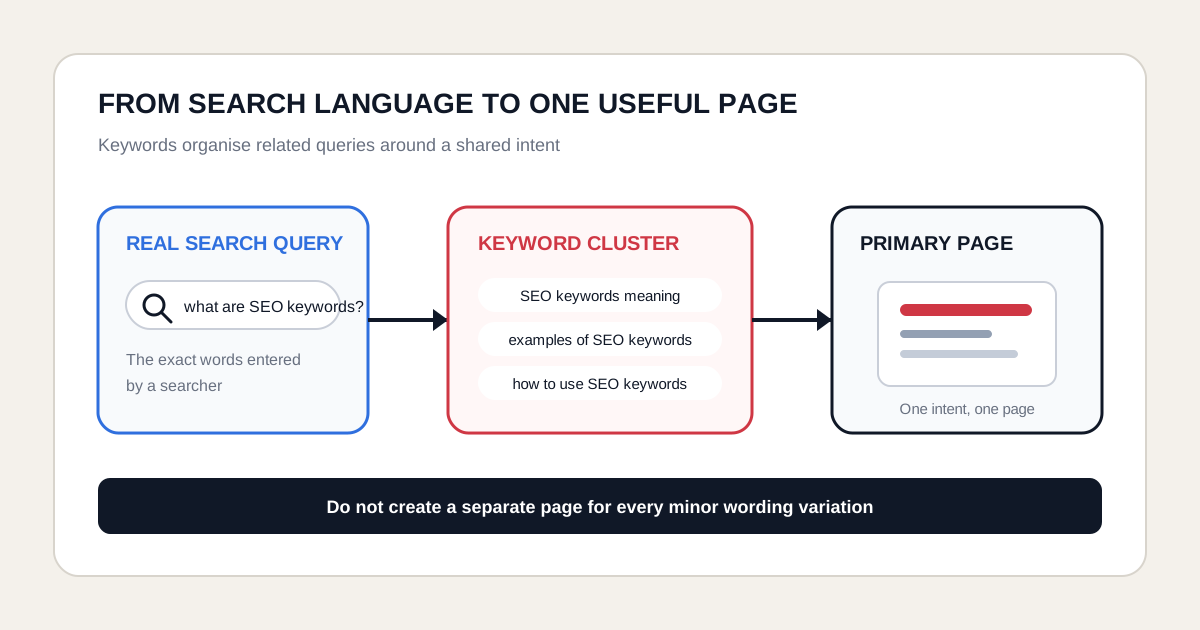
What is an SEO keyword?
An SEO keyword is a word or phrase selected to represent the topic, intent and language a page should address.
For example, a page about choosing an independent marketing professional might use the keyword marketing freelancer. The same page can answer closely related searches about costs, services, benefits and comparisons with an agency when those searches share the same intent.
What is the difference between a keyword and a search query?
A keyword is a research and page-planning concept, while a search query is the exact wording a person typed or spoke into a search engine.
| Term | Meaning | Example |
|---|---|---|
| Keyword | A targeting concept used to organise topics and pages. | SEO consultant |
| Search query | The actual wording entered by a searcher. | Who is a good SEO consultant for a small business? |
| Keyword cluster | A group of queries with the same or closely related intent. | SEO consultant, SEO specialist, SEO advice |
SEO tools often label estimated phrases as keywords. Google Search Console reports real, aggregated search queries. Keeping the terms separate makes research, reporting and page decisions clearer.
Why are keywords important for SEO?
Keywords help you understand how people describe a need and whether a page matches both their language and expected outcome.
- They reveal topics and questions people actively search for.
- They help map one dominant search intent to one primary page.
- They support descriptive titles, headings, links and page copy.
- They expose missing content and pages that overlap.
- They create query groups that can be monitored in Search Console.
Keywords are one input, not a complete ranking system. A page also needs useful content, crawlable links, a technically reliable website and enough evidence to support its relevance and quality.
Do keywords still matter in modern SEO?
Yes. The words people use remain valuable for understanding demand, intent and page relevance, but modern SEO does not depend on matching one exact phrase a fixed number of times.
Google advises site owners to anticipate the words readers may search for while writing helpful, reliable and people-first content. Its language systems can also understand how a page relates to queries even when every exact variation is not present. Related terms, entities, examples and context should therefore complete the answer naturally.
What are examples of SEO keywords?
SEO keywords can describe a definition, service, comparison, location, brand or intended action.
| Keyword type | Example | Likely intent |
|---|---|---|
| Local service | Google Ads specialist Limburg | Hire a specialist in a defined region. |
| Definition | what are SEO keywords | Understand a concept. |
| Comparison | SEO consultant vs agency | Compare two solutions. |
| Commercial research | best SEO tools for small business | Evaluate options before choosing. |
| Transactional | book SEO consultation | Take a direct action. |
| Branded | Jakency SEO services | Find information about a known brand. |
| Long-tail question | how to find low competition keywords for a local service website | Solve a specific problem. |
What types of SEO keywords exist?
Keywords can be classified by length, brand relationship, geography, search intent and stage in the customer journey.
| Keyword type | Description | Typical use |
|---|---|---|
| Short-tail | A broad and usually short phrase, such as SEO tools. | Broad topic discovery. |
| Long-tail | A longer, more specific phrase, such as SEO tools for a local accounting firm. | A specific need or decision. |
| Branded | Contains a brand, person or product name. | Known-entity navigation or research. |
| Non-branded | Describes a problem, category or service without a brand. | Discovery and comparison. |
| Local | Includes a location or has clear local intent. | Find a nearby or regional solution. |
| Informational | Asks for a definition, explanation or process. | Learn. |
| Commercial | Compares providers, tools, prices or alternatives. | Evaluate. |
| Transactional | Shows an intention to buy, book, request or download. | Act. |
What is search intent?
Search intent is the purpose behind a query, such as learning, comparing, finding a specific website, choosing locally or completing an action.
Intent is more important than exact wording. Two different phrases can belong on the same page when searchers expect the same answer. Similar-looking phrases may require separate pages when the expected page type, offer or next step differs. Read the complete explanation of search intent.
How do you find SEO keywords?
Find keywords by combining customer language, existing website data, search-result analysis and keyword research tools.
- List the services, products, problems and questions the website genuinely covers.
- Collect language from customers, sales calls, support questions and site search.
- Review Search Console queries and pages that already receive impressions or clicks.
- Use Keyword Planner or another research tool to discover related phrases and estimated demand.
- Inspect the search results to identify the expected page type and intent.
- Group closely related queries into clusters.
- Map each important cluster to one existing or planned primary page.
- Prioritise by business value, relevance, evidence, competition and implementation effort.
The dedicated keyword research page explains how Jakency turns this workflow into a practical content and landing-page plan.
Which keyword research tools can you use?
Use multiple data sources because no single tool provides a complete or exact picture of search demand.
| Source or tool | What it contributes |
|---|---|
| Google Search Console | Queries and pages that already show in Google Search. |
| Google Keyword Planner | Keyword ideas, estimated monthly searches and advertising cost estimates. |
| Google Trends | Relative interest and changes over time. |
| Search results | Current page types, formats, competitors and SERP features. |
| Third-party SEO tools | Keyword databases, ranking estimates, difficulty metrics and competitor research. |
| Customer and sales data | Real words, objections, questions and decision criteria. |
Search volume and keyword difficulty are estimates that vary by tool, location, language and methodology. Use them for comparison and prioritisation, not as guaranteed traffic forecasts. The SEO tools overview explains where each data source fits.
How should you group keywords?
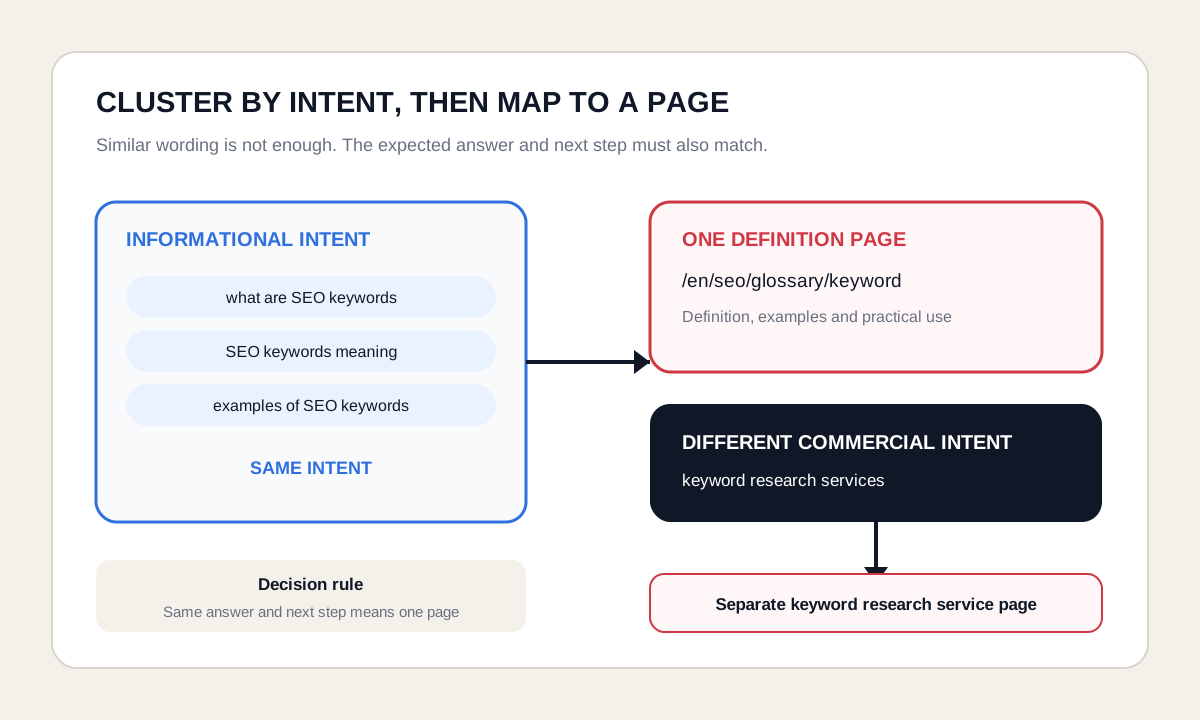
Group keywords when they share the same search intent and can be answered well by the same page.
| Mapping decision | Example | Reason |
|---|---|---|
| Same page | what are SEO keywords; SEO keywords meaning; what is an SEO keyword | All expect a definition, examples and practical use. |
| Separate pages | SEO keywords; keyword research services | One expects information, the other a commercial service. |
| Separate local page | marketing freelancer; marketing freelancer Limburg | A regional page is useful only when it adds genuine local value. |
How many keywords should one page target?
There is no fixed number. One page should target one dominant intent and can naturally cover many related keywords that expect the same answer.
A narrow definition page may cover a small cluster. A detailed service page can answer many related queries about process, pricing, deliverables and suitability. Split the content when the searcher expects a materially different page, offer or next step.
Where should you use keywords on a page?
Use important and descriptive wording where it helps users and search engines understand the page.
| Location | Recommended use |
|---|---|
| Title element | A concise description of the page and its main intent. |
| Main heading | The visible subject or question answered by the page. |
| Opening paragraph | A direct answer that establishes the content scope. |
| Section headings | Natural subtopics and follow-up questions. |
| Body content | Examples, evidence, related language and complete explanations. |
| Internal links | Descriptive anchor text that explains the target page. |
| Image alt text | A useful description when an image contributes information. |
| URL | A short and understandable path where practical. |
Do not force the exact phrase into every location. A clear title, heading and useful answer are more important than mechanically repeating one keyword.
What is keyword density?
Keyword density is the percentage of words on a page represented by a particular word or phrase.
Google does not publish a universal target density. A percentage cannot determine whether a page satisfies intent, provides reliable information or deserves to rank. Write naturally and edit repetitions that make the page awkward.
What is keyword stuffing?
Keyword stuffing is the excessive or unnatural repetition of words or numbers in an attempt to manipulate search rankings.
Examples include lists of locations without useful local information, repeated variants in every sentence and keyword blocks written for crawlers instead of readers. Google identifies keyword stuffing as a spam practice.
Does Google use the meta keywords tag?
No. Google Search does not use the meta keywords tag for indexing or ranking.
Do not spend time maintaining a hidden keyword list. Focus on the visible page, descriptive title, main heading, internal links, useful images and content quality.
Should a keyword be in the domain or URL?
A descriptive URL can help users understand a page, but a keyword in the domain or path does not replace useful content or guarantee a ranking advantage.
Choose stable and readable URLs. Avoid changing an established URL only to insert another keyword unless the migration has a clear structural benefit and redirects are implemented correctly.
How do you choose a primary keyword?
Choose a primary keyword that best represents the page's dominant intent, genuine offer or information and expected search result.
| Selection factor | Question to ask |
|---|---|
| Relevance | Can the page answer the query accurately and completely? |
| Intent match | Does the page type match what users expect? |
| Business value | Does the query support a meaningful company or audience goal? |
| Existing evidence | Does the organisation have expertise, data, examples or a related service? |
| Competition | Can the page offer enough quality and distinction to compete? |
| Measurement | Can the cluster be monitored by query and landing page? |
What are related keywords and entities?
Related keywords are alternative phrases and subtopics connected to the same intent, while entities are identifiable people, organisations, places, products, services or concepts.
A page about SEO keywords can naturally discuss search queries, search intent, keyword research, Google Search Console and Google Keyword Planner. Add these concepts when they help answer the topic, not because a tool produced a checklist of terms.
How do you map keywords to pages?
Keyword mapping assigns every important query cluster to one intended primary page.
| Cluster | Primary page | Role |
|---|---|---|
| SEO keywords meaning and examples | /en/seo/glossary/keyword | Definition and education. |
| Keyword research service | /en/seo/on-page/keyword-research | Research, clustering and commercial guidance. |
| SEO services | /en/seo/services | Service overview and conversion. |
| Google Search Console | /en/seo/glossary/google-search-console | Tool definition and measurement. |
When two pages receive impressions for the same query, investigate whether they serve different intents. If they do not, make one page the clear primary destination through consolidation, internal links and content changes.
How do you measure keyword performance?
Measure keyword clusters through the landing pages they support instead of relying on one isolated ranking.
| Measurement area | What it shows |
|---|---|
| Search Console queries | Which queries generated impressions and clicks. |
| Pages | Which landing page appeared for each query cluster. |
| Impressions and clicks | Visibility and traffic from Google Search. |
| CTR | Whether the result attracted clicks within its position and SERP context. |
| Position context | A diagnostic average, not a complete measure of success. |
| GA4 outcomes | Engagement, events, leads, sales or other on-site outcomes. |
| Change log | Titles, content, internal links and technical changes with publication dates. |
Google Search Console provides the strongest source for actual Google query and page performance. When organic queries are hidden in Analytics, the not provided SEO guide explains how page-level measurement works.
What is the difference between SEO and Google Ads keywords?
SEO keywords are research and content-planning concepts, while Google Ads keywords are campaign settings that help determine when an advertisement can enter an auction.
| Term | Use |
|---|---|
| SEO keyword | Used to understand organic demand, intent, page content and measurement. |
| Google Ads keyword | Added to a paid campaign with match types, bids and other settings. |
| Search term or query | The actual wording entered by the user in organic or paid search. |
Which official sources support this guidance?
Google recommends anticipating the words readers may use, using descriptive page elements and creating useful, reliable content. It also states that keyword stuffing violates its spam policies and that Google Search does not use the meta keywords tag. The main references are the Google SEO Starter Guide, Google Search spam policies and supported meta tags documentation.
Which concepts are related to SEO keywords?
- Search intent: the purpose behind a search and the main basis for clustering.
- Keyword research: discovering, grouping and prioritising search demand.
- Google Search Console: actual query and landing-page performance.
- SEO tools: supporting research, measurement and competitor analysis.
- Title tag: a descriptive title element used by browsers and search engines.
- Not provided: why organic queries are hidden in Analytics.
Keyword cannibalization is only actionable when overlapping URLs serve substantially the same intent and create an unwanted search outcome. Diagnose query-to-page data, page purpose and business impact before merging or redirecting content.
SEO-friendly URLs use a stable, crawlable and descriptive structure without treating the path as a keyword field. Review URL anatomy, parameters, international structures and migration decisions before changing established addresses.