
Nofollow vs dofollow
| Type | Passes value? | Typical use |
|---|---|---|
| Dofollow | Yes | Regular, editorial links |
| Nofollow | No (signal) | Advertisements, paid or UGC links |
A natural link profile contains a mix of both. For your link building, dofollow links from relevant sites are the most valuable, but nofollow links can also bring traffic and visibility.
What should you know about nofollow?
| Quick fact | Detail |
|---|---|
| Also called | rel nofollow, nofollow link, link qualification |
| Primary source | Google Search Central documentation about nofollow, sponsored and ugc |
How does nofollow work in practice?
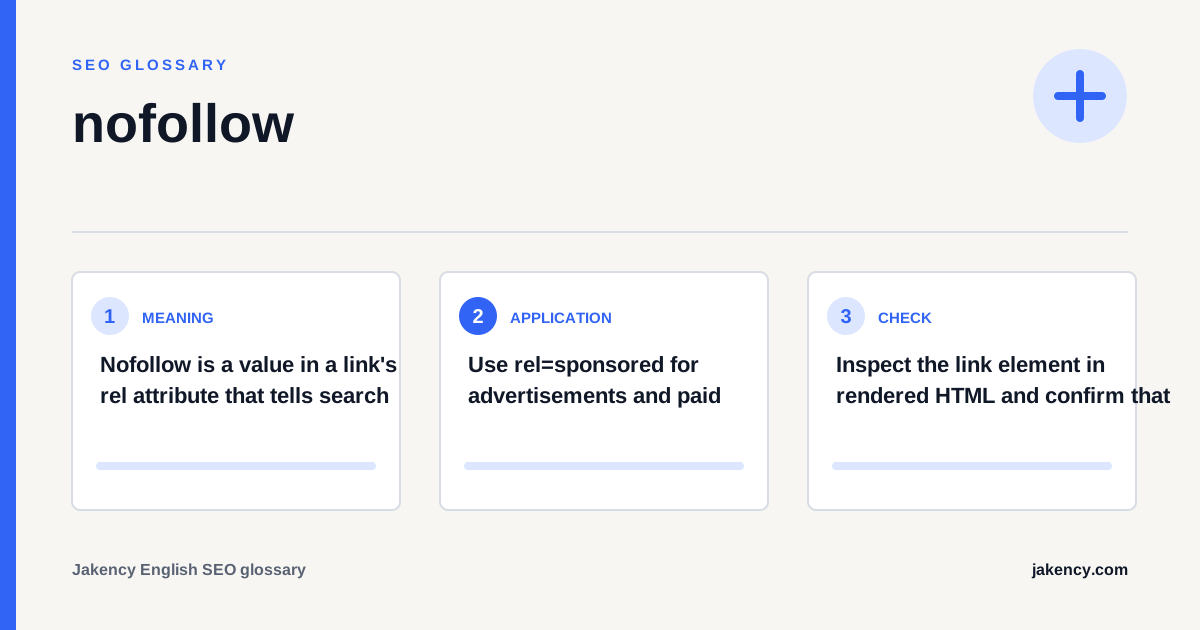
Use rel=sponsored for advertisements and paid placements, rel=ugc for suitable user-generated links and nofollow when another link should not be endorsed.
- Classify the relationship: Distinguish editorial, paid, user-generated and untrusted links.
- Choose the specific value: Use sponsored or ugc when they fit and nofollow for other exceptions.
- Apply it to the link: Add the value to the rel attribute of the actual anchor element.
- Keep it useful: A qualified link can still be visible and valuable to the reader.
- Audit templates: Review ads, comments, partners and external widgets across the site.
How do you check nofollow?
Inspect the link element in rendered HTML and confirm that the attribute accurately describes the real relationship.
- Paid placements use rel=sponsored or nofollow.
- User links receive rel=ugc where appropriate.
- Editorial source citations are not all automatically nofollowed.
- The attribute appears on a real crawlable <a href> link.
- Main internal navigation does not use nofollow for PageRank sculpting.
- Combinations such as sponsored nofollow are separated correctly.
Which mistakes should you avoid with nofollow?
Do not use nofollow as a general method for directing internal authority or crawl budget. Important internal navigation should normally use standard crawlable links.
| Mistake | Why it matters |
|---|---|
| Nofollowing every external link | Normal source citations are part of useful web content and do not require blanket rejection. |
| Treating nofollow as a block | Google treats the values as hints and can discover the destination through other routes. |
| Leaving paid links unmarked | This hides the commercial relationship and can conflict with Google's link spam policies. |
How do you audit nofollow links?
Review link relationships by template and content type. The desired outcome is correct qualification, not a particular percentage of nofollow links.
| Signal | Interpretation |
|---|---|
| Links by rel type | Shows where sponsored, ugc, nofollow and normal links are used. |
| Unqualified paid links | Identifies commercial placements that still appear as standard links. |
| Internal nofollow links | Reveals navigation and content links using an unnecessary exception attribute. |
How does nofollow relate to other SEO concepts?
nofollow rarely operates in isolation. Use the related concepts below to connect this definition with the next technical, content or measurement decision for your website, audience and market.
- backlink: A backlink is a hyperlink on another website that points to a page on your website.
- anchor text: Anchor text is the visible, clickable text of a hyperlink and gives users and search engines context about the linked destination.
- paid search: Paid search is advertising that can appear for queries and other placements within a search engine in exchange for media spend.
- Domain Authority: Domain Authority is a predictive score from 1 to 100 developed by Moz to estimate a domain's relative ranking potential using data and models from Moz's own link index.
What is this explanation based on?
The definition and the checks on this page follow the primary source listed at the top. The practical recommendations combine that documentation with page-level SEO analysis. Where the documentation makes no statement, the page says so instead of assuming one.
More questions about nofollow
Does Google follow nofollow links?
Google treats nofollow, sponsored and ugc as hints. They are not absolute blocks on discovery or processing.
Should affiliate links be nofollow?
Affiliate links are part of a commercial relationship. Google recommends rel=sponsored, optionally combined with nofollow.
Does nofollow save crawl budget?
No, it is not reliable crawl control. Use URL architecture, robots rules and technical solutions that address the actual problem.